PROMPT RECORD · 公开作品详情
完整提示:https://t.co/dyRG88qbyl
公开 AI 图像创作记录,包含原图、提示词、使用模型、作者、标签与来源。
- 使用模型
- GPT-Image-2
- 创作者
- @iamaiistudio
- 发布时间
- Tue Jun 09 04:15:53 +0000 2026
- 图片数量
- 4 张
完整提示词
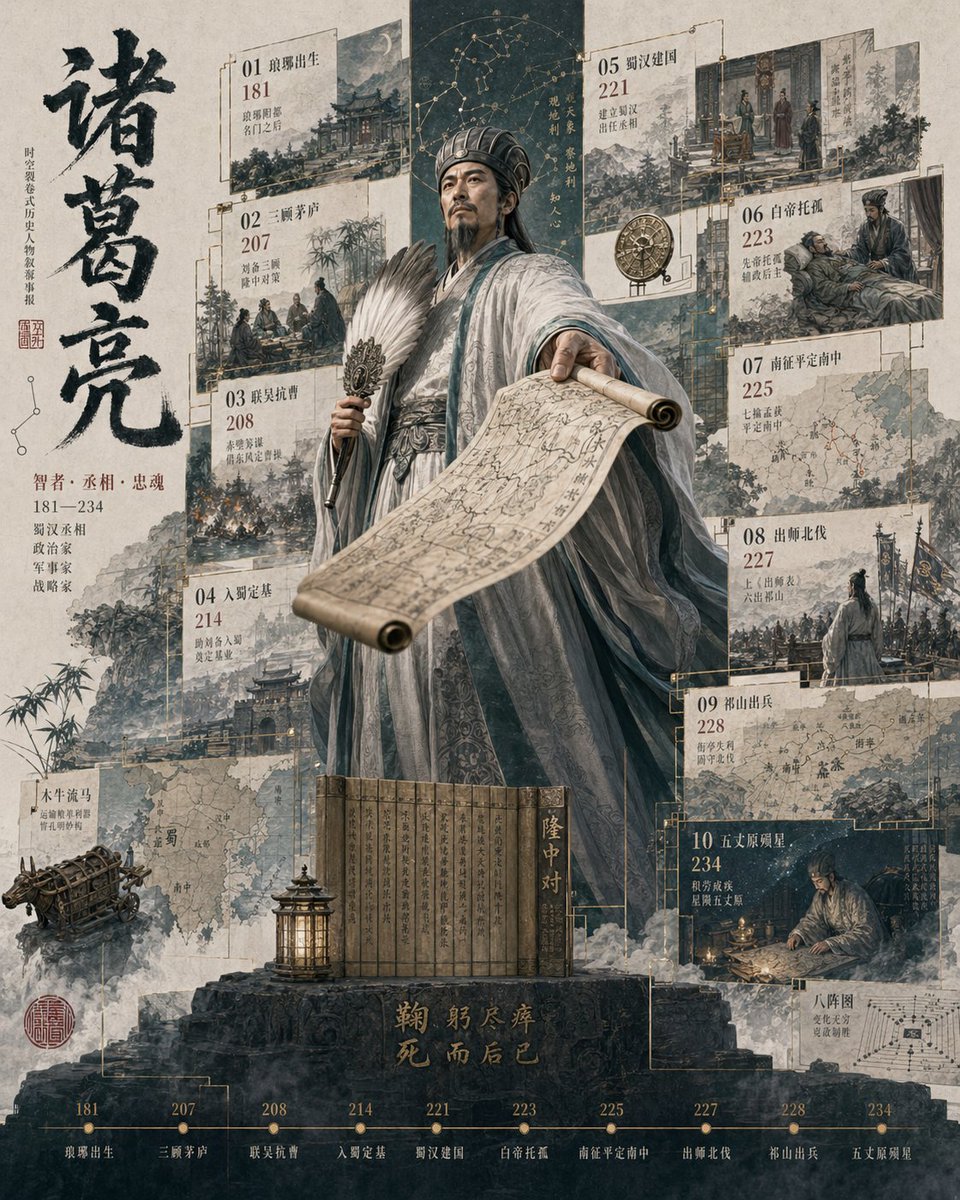
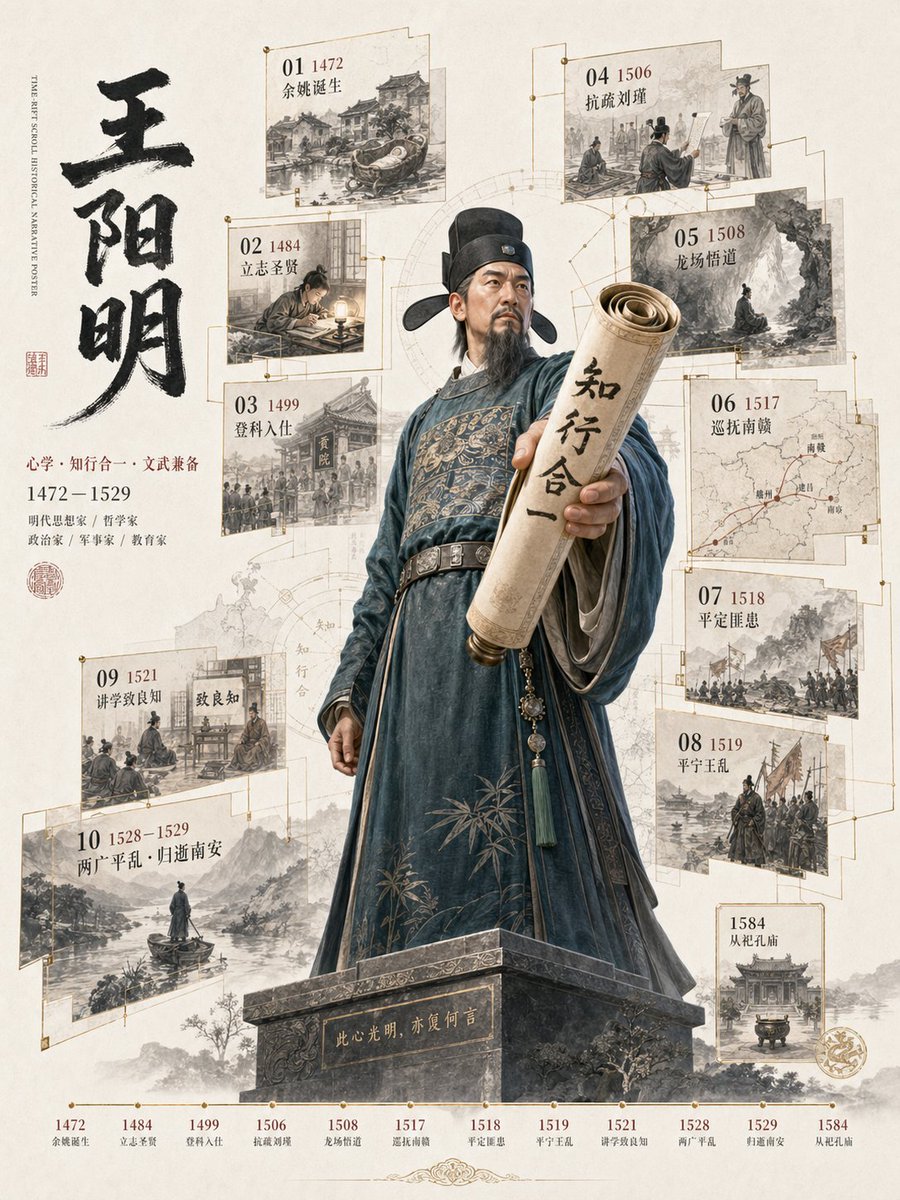
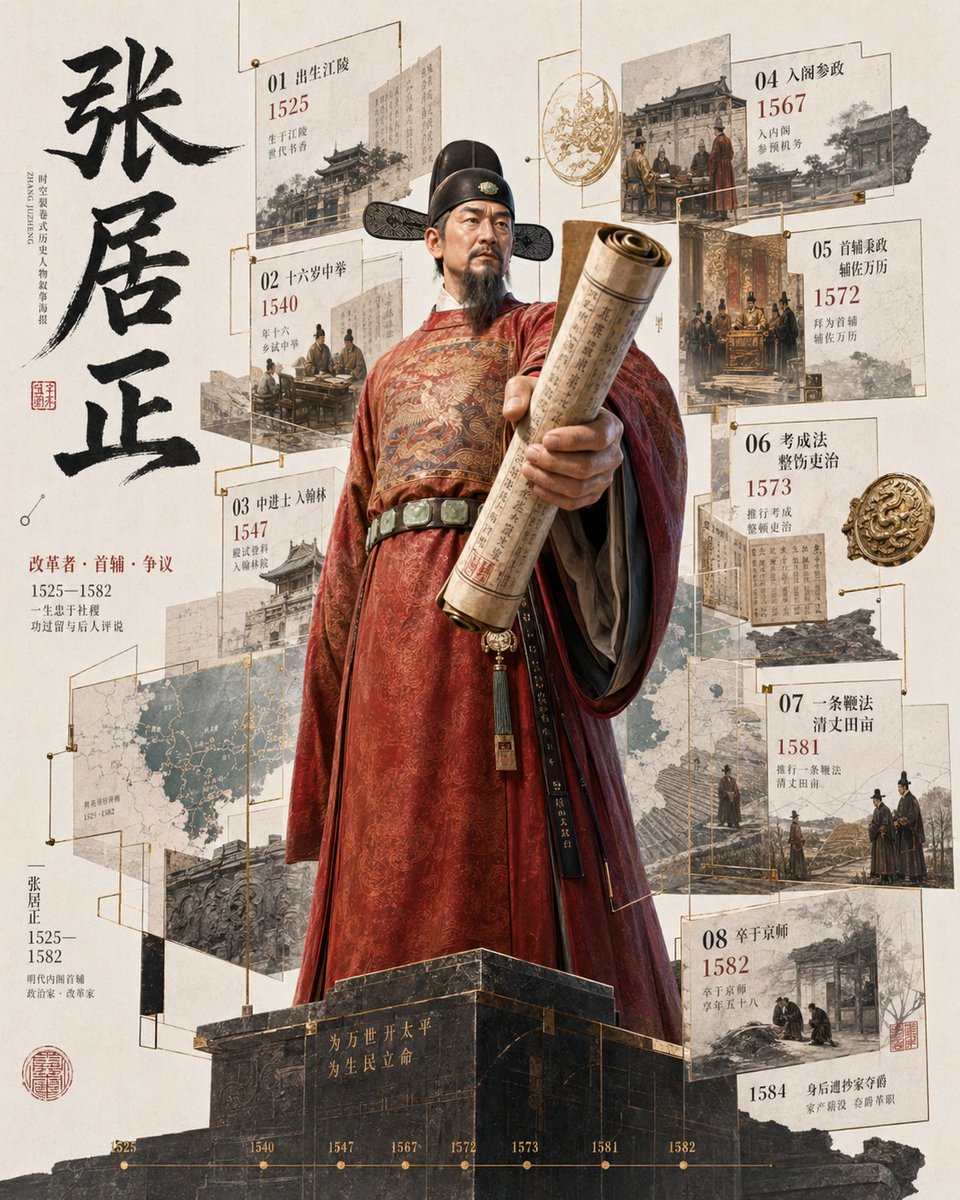
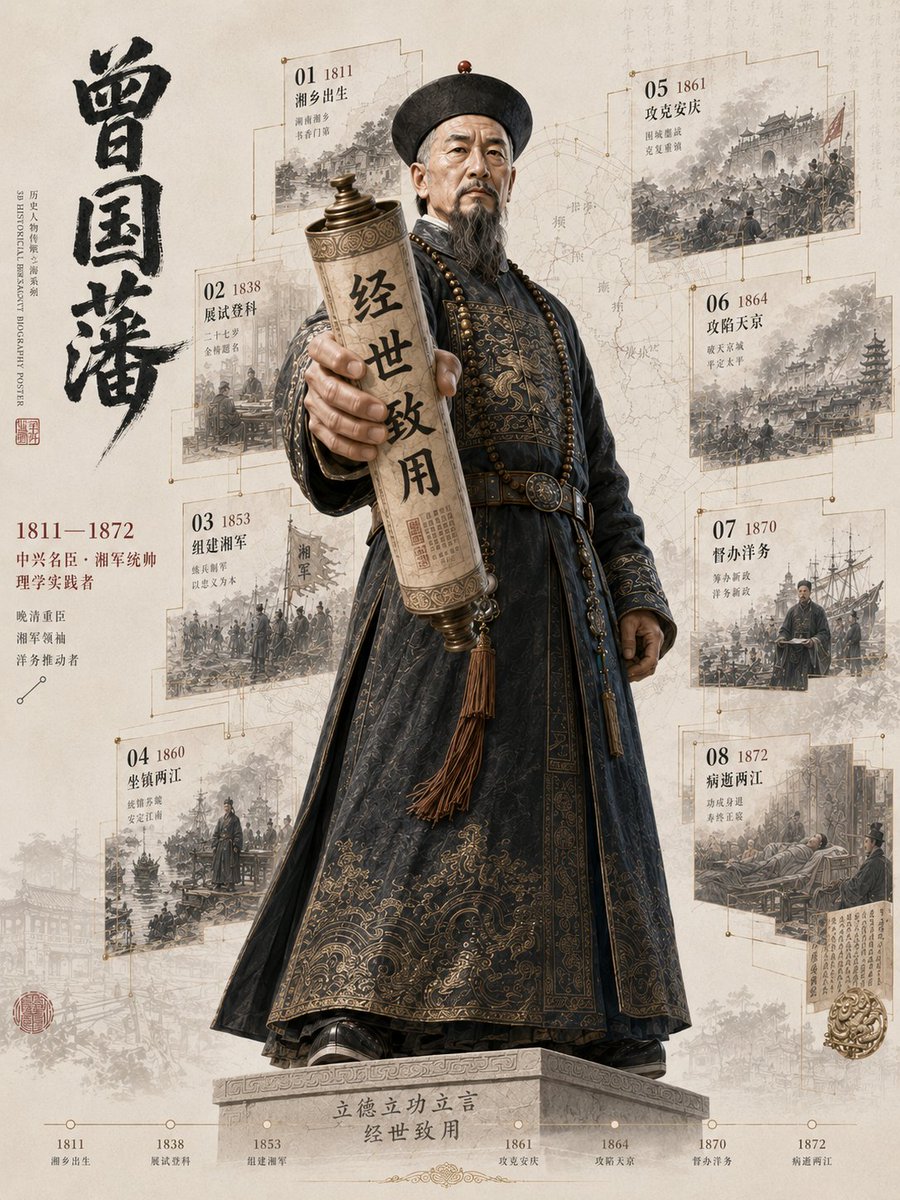
源提示词按原始换行与标点完整保留Full prompt: https://t.co/dyRG88qbyl Generate a detailed "3D Historical Figure Breakout Biography Poster" with cinematic depth and archival richness. [User Inputs] Subject: [PERSON NAME] Role: [Emperor / General / Statesman / Philosopher / Writer / Reformer / Military Strategist, etc.] Time Period: [Dynasty / Historical Era] Core themes: [Unification / Reform / Loyalty / Mind Philosophy / Northern Expedition / Institution / Golden Age, etc.] Color scheme: [Black-gold-red / cyan-blue-gray-gold / dark red and ink gold / iron-blue, etc.] Aspect ratio: [3:4 vertical] At the center of the composition, place a complete, full-body 3D historical figure — the dominant visual element — with strong sculptural volume, cinematic weight, and historical gravitas. Clothing, headwear, armor, patterns, belt, and accessories must match their era and identity. The figure stands on a minimal monument-style pedestal that anchors without overwhelming. The figure must perform a clear "breakout-forward action": hands, arms, or a signature prop (jade seal, imperial edict, scroll, spear, sword, military tally, court tablet, map, or book scroll) must thrust toward the viewer, creating powerful foreshortening and 3D frame-breaking impact. The extended prop must be fully visible and unmistakable — not cropped. Surround the figure with 6–10 key historical event nodes arranged as lightweight, floating, multi-angled, semi-transparent clusters. Each node contains 2–4 fragments: number, year, event title, brief annotation, a small historical scene, plus fine gold connector lines, open frames, and node dots. These clusters should feel like dissected time slices drifting around the figure in an airy archival style — never heavy info-card blocks. Vary the orientation and depth of each cluster: some tilted left, some right, some angled inward or outward, at different heights, with slight overlaps from the figure's arms, robes, or weapon to enhance spatial depth. Give them a glass/acrylic look with faintly glowing edges, incomplete frames, and subtle layering — rich in information, light in visual weight. On the left side, place a large title with [PERSON NAME] in a font with oriental historical character — calligraphic, stele-carved, or ink-brushed. Add birth/death years, identity tags, keyword summary, and a sweeping subtitle. Keep the title area stable, clean, and uncluttered. Along the bottom, add a slim horizontal timeline connecting major life events, using thin gold lines, small dots, clean year labels, and minimal annotation. Style it like a museum time ruler or curatorial guide — not a thick info bar. Use a cream-white, antique paper, or light archival-wall texture as the background. Keep overall saturation low and restrained. Optionally include faint map textures, ancient architecture silhouettes, seal motifs, gold connector lines, or territorial outlines to evoke a historical exhibition atmosphere. Visual hierarchy rules: Central figure: heavy, realistic, three-dimensional, strong chiaroscuro. Historical event clusters: thin, transparent, floating, faintly glowing. Figure's gesture: breaking forward, full spatial impact. Bottom timeline: light, clean, informational only. Priority order if elements conflict: 1. Full-body central figure must be complete. 2. Forward-extending prop must be fully visible with strong 3D impact. 3. Event clusters must feel light and floating, not solid cards. 4. Figure stays visually heavy; information system stays visually light. 5. Timeline stays minimal and unobtrusive. If precise small text is difficult, prioritize legibility for the person's name, years, numbers, and event titles — brief descriptions may be simplified. #AIart #GPTImage2
提示词译文
译文与源提示词分开显示,不替代原文完整提示:https://t.co/dyRG88qbyl 生成一张细节丰富的"3D历史人物破框传记海报",具有电影级深度与档案级厚重质感。 [用户输入] 人物:[人物姓名] 身份:[皇帝 / 将领 / 政治人物 / 哲学家 / 文学家 / 改革者 / 军事家 等] 时代:[朝代 / 历史时期] 核心主题:[统一 / 改革 / 忠义 / 心学 / 北伐 / 制度 / 盛世 等] 配色方案:[黑金红 / 青蓝灰金 / 暗红墨金 / 铁青蓝 等] 画幅比例:[3:4 竖版] 在画面中央,放置一个完整、全身的3D历史人物形象——作为占主导地位的视觉元素——拥有强烈的雕塑体积感、电影级分量感与历史厚重感。服饰、头冠、铠甲、纹样、腰带、配饰必须匹配其所属时代与人物身份。人物站立于一座极简的纪念碑式底座之上,起稳固作用而不喧宾夺主。 人物必须执行明确的"破框前推动作":手部、手臂或标志性道具(玉玺、诏书、卷轴、长矛、利剑、兵符、朝笏、地图或书卷)必须向观者方向刺出,营造强烈透视缩短与三维破框冲击。伸出的道具必须完整可见且毫不含糊——不可被裁切。 围绕人物布置6–10个关键历史事件节点,排列为轻盈悬浮、多角度、半透明的群组。每个节点包含2–4个片段:编号、年份、事件标题、简要注释、一幅小型历史场景图,加上纤细的金色连接线、开放框体与节点圆点。这些群组应像被解构的时间切片,围绕人物以通透的档案风格漂浮——绝不可是厚重的信息卡片块。 每个群组的方向与纵深要有变化:有的向左倾斜、有的向右、有的向内或向外成角,高度各异,并与人物的手臂、衣袍或兵器产生轻微遮挡,以增强空间纵深。赋予其玻璃/亚克力质感,带有微光边缘、不完整框体与微妙分层——信息丰富但视觉轻盈。 在左侧放置包含[人物姓名]的大型标题,采用带有东方历史气质的字体——书法体、碑刻体或水墨笔触体。添加生卒年、身份标签、关键词摘要以及气韵连贯的副标题。保持标题区域稳定、整洁、不杂乱。 在底部添加一条纤细的水平时间轴,串联主要生平事件,使用细金线、小圆点、清晰的年份标签与极简注释。风格如博物馆时间尺或策展导览——而非粗厚的信息条。 使用米白、仿古纸张或浅色档案墙纹理作为背景。整体饱和度保持低且克制。可选加入淡化的地图纹理、古建筑轮廓、印章纹样、金色连接线或疆域轮廓,以营造历史展览氛围。 视觉层级规则: 中央人物:厚重、真实、三维,具有强烈明暗对比。 历史事件群组:纤细、透明、悬浮、微微发光。 人物姿态:破框前推,具有完整的空间冲击。 底部时间轴:轻盈、简洁、仅作信息性呈现。 若元素发生冲突,优先级顺序如下: 1. 中央全身人物必须完整。 2. 前伸的道具必须完整可见且具有强烈的3D冲击。 3. 事件群组必须呈现轻盈悬浮感,而非实心卡片。 4. 人物保持视觉厚重;信息系统保持视觉轻盈。 5. 时间轴保持极简而不突兀。 若精细小字难以实现,优先保证人名、年份、数字与事件标题的可读性——简要描述可适当简化。 #AIart #GPTImage2